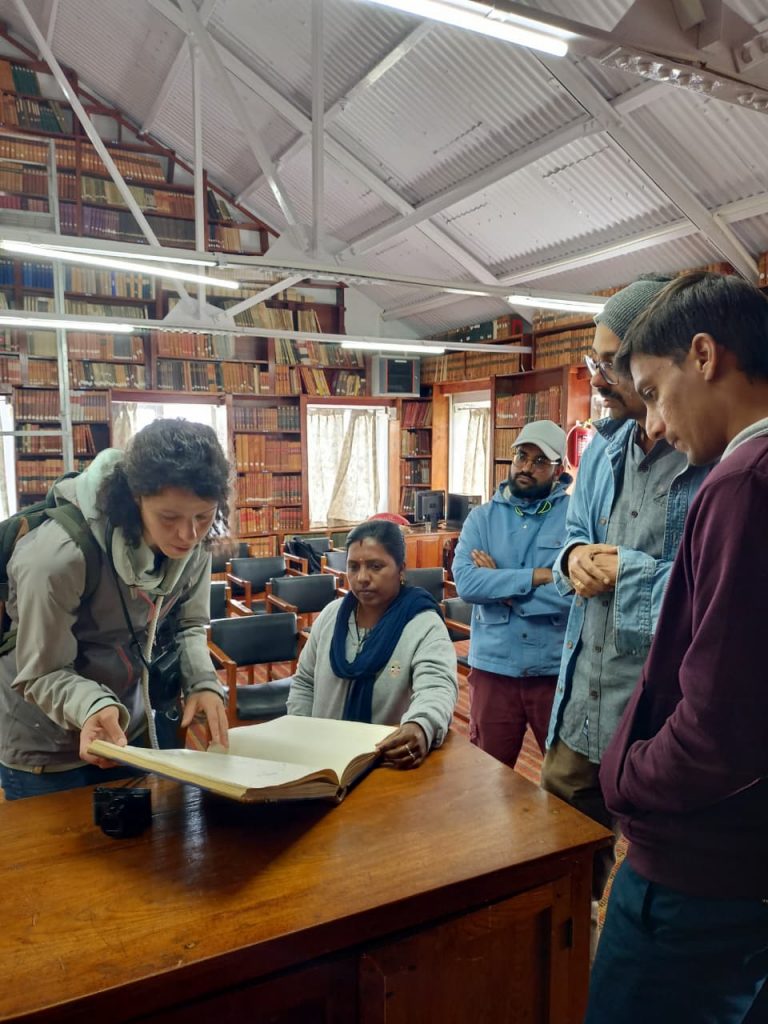
“125 Years Under the Sun: Honouring the Legacy of KSO”
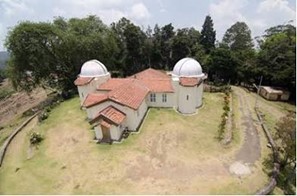
The Kodaikanal Solar Observatory (KSO), located amidst the mist-covered Palani Hills of Tamil Nadu, has stood as a monumental center of solar research in India for over 125 years. Established on 1 April 1899, the observatory is administered by the Indian Institute of Astrophysics (IIA) and is globally recognized for maintaining one of the world’s most continuous and scientifically valuable solar observation archives. Over its long and distinguished history, KSO has made pioneering contributions to the understanding of solar activity, from early photographic documentation of sunspots to advanced studies of solar flares, prominences, and the solar corona. Its data has proven indispensable to solar physicists and has informed critical research on solar-terrestrial interactions, space weather, and climate systems.
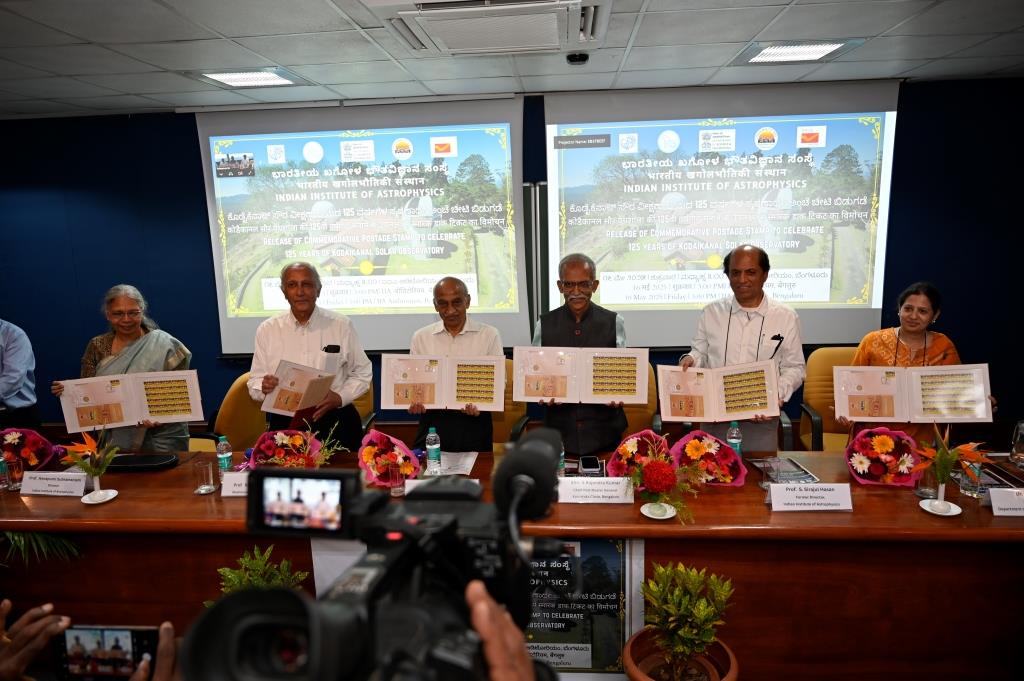
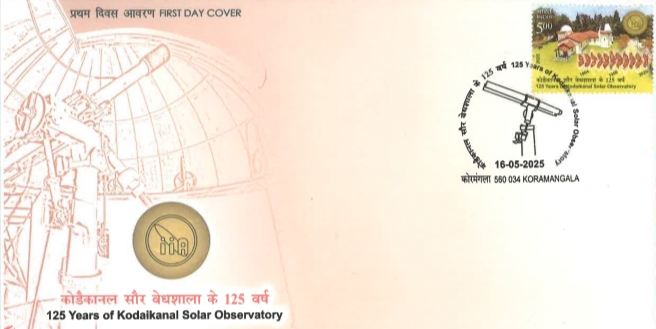
To commemorate this historic milestone, the Department of Posts, Government of India, released a special commemorative postage stamp honoring the observatory’s exceptional legacy and national importance. A formal stamp unveiling ceremony was held at the Indian Institute of Astrophysics in Bengaluru. The event was presided over by Shri S. Rajendra Kumar, Chief Postmaster General, Karnataka Circle, and featured the distinguished presence of Shri A. S. Kiran Kumar, Chairperson of the IIA Governing Council and former Chairman of ISRO. Their participation, along with that of eminent scientists, government officials, academic leaders, and members of the astronomical community, reflected the scientific and institutional reverence associated with KSO.
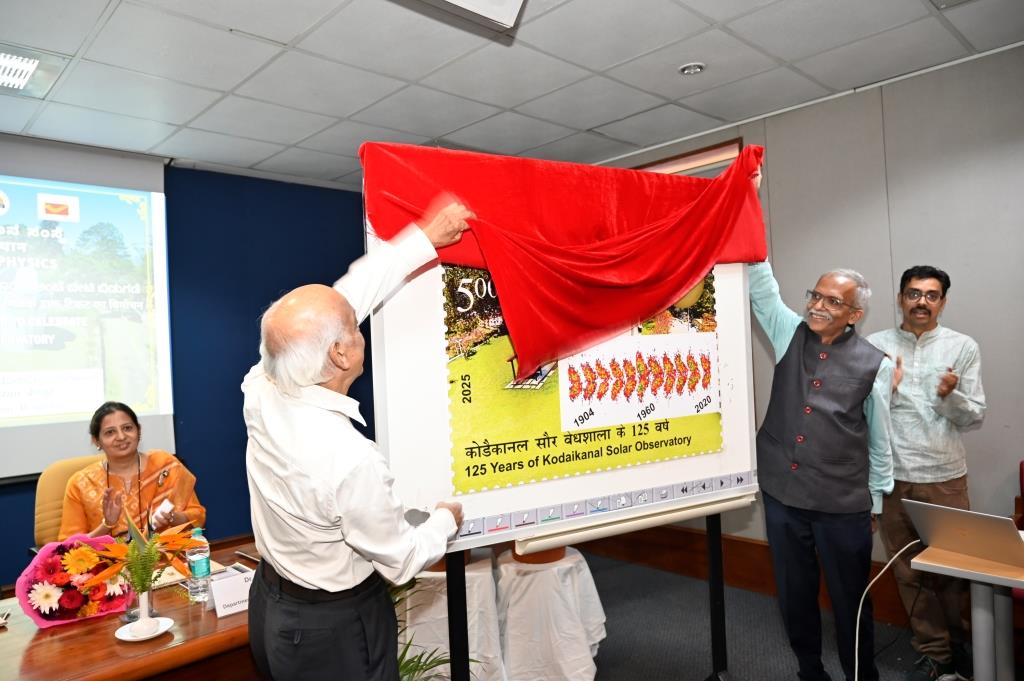
Adding to the significance of the occasion was the presence of the former Directors of IIA, whose attendance served as a symbolic bridge between the observatory’s illustrious past and its promising future. The event drew a large and enthusiastic audience, including researchers, scholars, students, and invited guests, all of whom gathered to celebrate this momentous chapter in Indian science. The energy and engagement of the attendees underscored the enduring relevance of KSO’s work and the inspiration it continues to provide to future generations.
 |  |
The ceremony attracted widespread attention from both regional and national media. A diverse range of press and broadcasting agencies were present to capture the event, and coverage appeared across multiple platforms including newspapers, online portals, and television networks. These efforts played a vital role in sharing the observatory’s story with the broader public and amplifying the message of India’s contributions to solar research. In addition to traditional media, a detailed account of the event, along with photographs and highlights, was published on the official website of the Indian Institute of Astrophysics. This digital outreach extended the celebration to a global audience, allowing alumni, researchers, and science enthusiasts from around the world to witness and engage with the milestone.
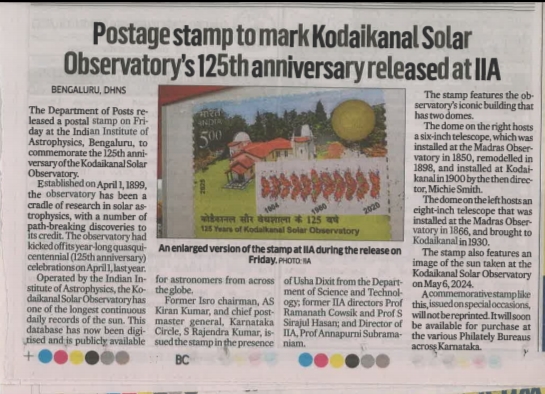 News article from Deccan Herald News article from Deccan Herald | 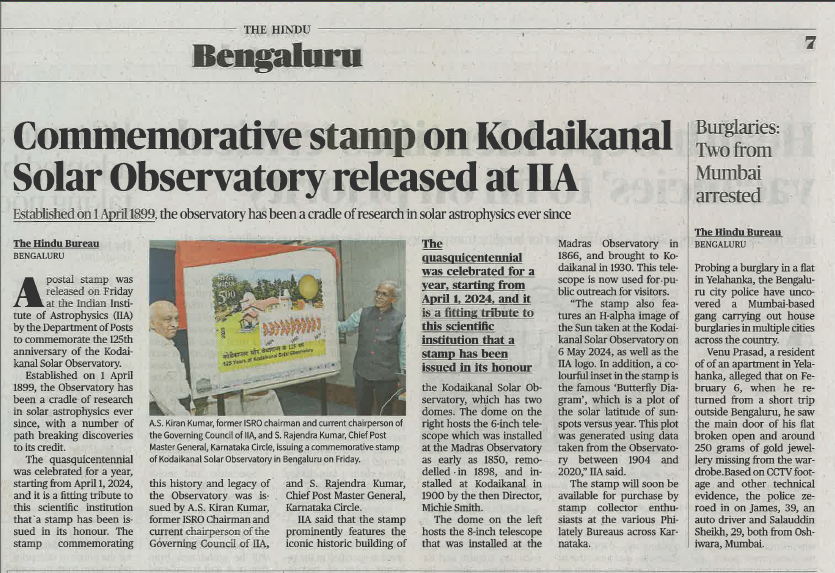 News article from The Hindu News article from The Hindu |
The commemorative stamp released on this occasion is more than a symbol of postal utility-it stands as a national tribute to scientific perseverance, institutional legacy, and India’s enduring commitment to space and astronomical sciences. It encapsulates more than a century of inquiry, innovation, and observation. Now preserved in the institutional archives of IIA, the stamp will remain a lasting emblem of the spirit of discovery that has defined the Kodaikanal Solar Observatory since its inception.
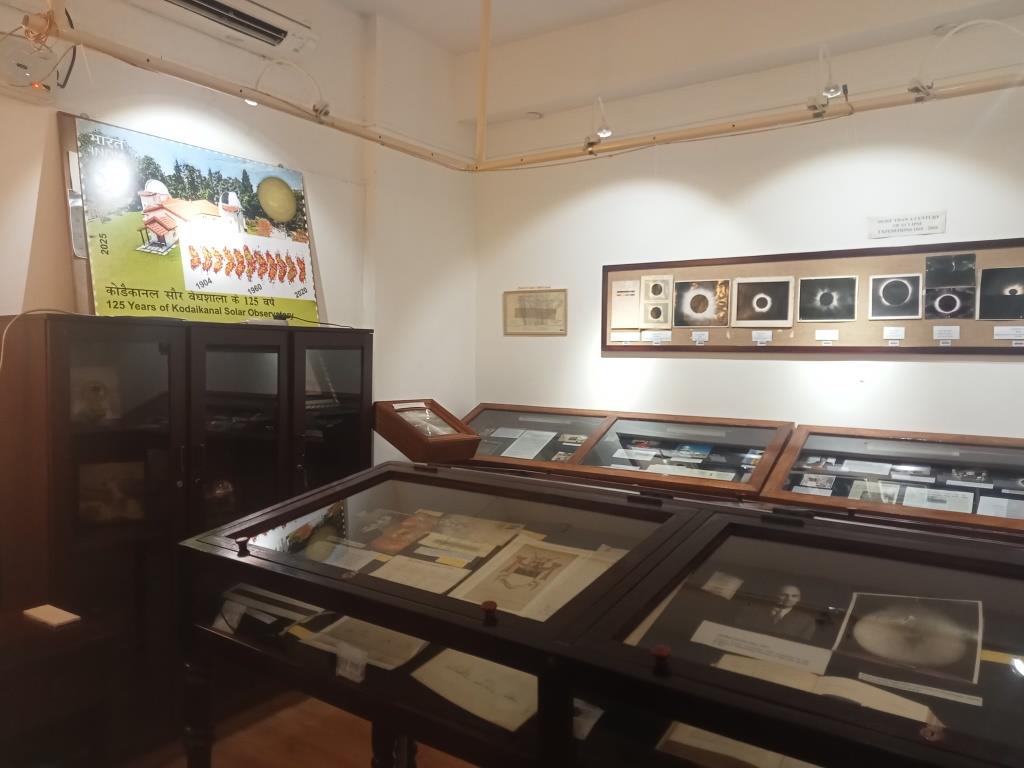
As KSO enters a new era of exploration, it does so with the strength of its history and the promise of new discoveries. With continual advancements in instrumentation and sustained commitment to collaboration, the observatory is poised to play a key role in shaping the future of solar physics-both in India and on the international stage. The legacy it carries is not merely one of data or discovery, but of vision, dedication, and the relentless human pursuit of knowledge beneath the same Sun it has observed for generations.