Testing Theoretical Bar Formation Criterion
Sandeep Kataria
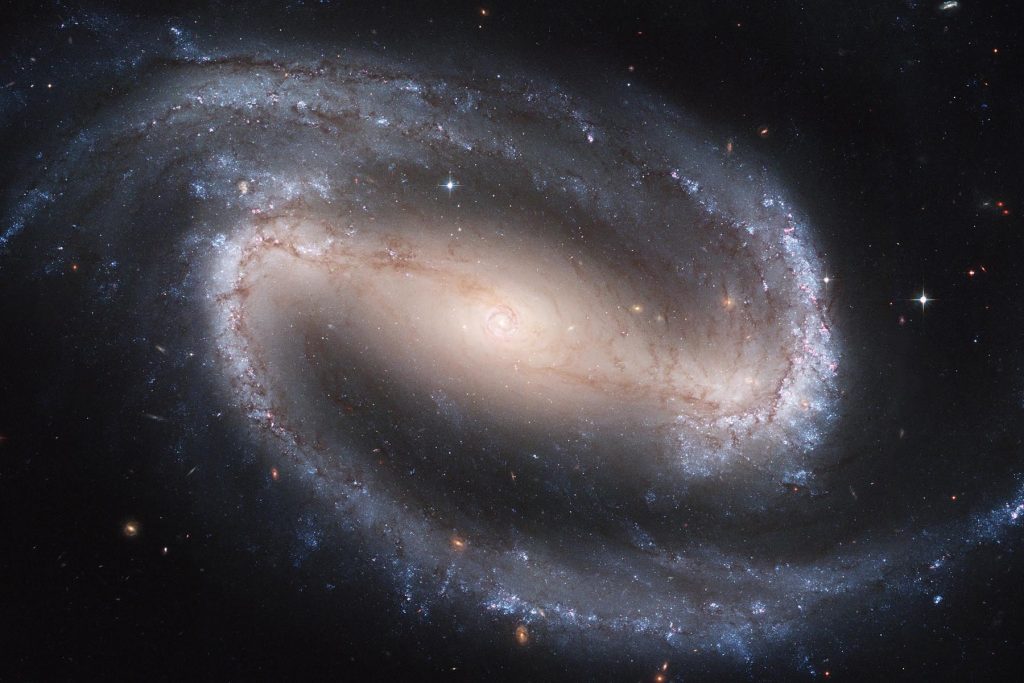
Bars are ubiquitous features in the disk galaxies. Observations show that around 2/3 of the disk galaxies in the observable universe (optical and infrared) have a bar in their central region. Bars are thought to be formed as a result of global instability in the disk, which traps eccentric orbits of the stars in the bar potential. As the bar formation is a complex phenomenon involving nonlinear dynamics, there is very little analytical understanding about these. Since the past several decades, bar types of instabilities are mostly studied with N-body simulations. Despite the absence of modern computers, the first N-body study was conducted by Erik Holmberg in 1941 with the help of bulbs and photocells, to find the forces among stars in an interacting galaxies system. Here, each star particle is provided with a bulb and photocell. Photocell captures the inverse square nature of gravity as it collects light from the other bulbs (other star particles in this case) and computes forces to predict it’s motion.
Pioneering study by Ostriker and Peebles in 1973 has shown that galaxy disks are prone to bar type instabilities if they are kinematically cooler or having lower velocity dispersion in the stars (i.e. ratio of rotational kinetic energy to potential energy < 0.14). Later on, there were several studies using N-body simulations which talked about bulge, disk and dark matter halo properties affecting the formation of bars. In our recent study, we have revisited the effect of bulges on the bar formation with the motivation to quantify the effect of bulge mass as well as bulge concentration on the bar formation in disk galaxies. In this study, we came up with a criterion which says that if the ratio of the radial force due to bulge and radial force due to halo at disk scale length exceeds 0.35 (Kataria & Das 2018), galaxy disk will be stable against bar instability. This criterion basically takes into account the effect of bulge mass and concentration on the stellar dispersion in the disk. As the bulge mass or concentration increases in the central region of the disk, it makes the disk kinematically hotter or tends to make it stable against bar instability. One of the advantages with this theoretical criterion is that it can be calculated with observable parameters of galaxies, i.e. bulge mass, disk scale length and rotation curve of galaxies etc.
“In this study, we came up with a criterion which says that if the ratio of the radial force due to bulge and radial force due to galaxy at disk scale length exceeds 0.35, galaxy disk will be stable against bar instability.”
With the motivation to test the above mentioned theoretical criterion in the current observational study, we have calculated the criterion values for disk galaxies using S4G data. We were able to obtain bulge mass, disk scale length and rotation curves for all the sample galaxies. We have used both barred and unbarred galaxies for this study with a total of 158 galaxies. We found that more than 92 % of barred galaxies in our sample follow bar formation criterion. This result clearly indicates that the disk is prone to bar instability only for certain bulge mass and concentration ranges as captured by theoretical bar formation criterion. This criterion is valid for isolated evolution of disk galaxies, where the velocity dispersion of disk changes through internal dynamics of the galaxy, i.e. presence of bulges etc. We have also checked our criterion for unbarred galaxies and we found that our criterion is a necessary condition for bar formation but not the sufficient one. This is because there are other processes which can increase the velocity dispersion in disk galaxies, like satellite interactions, galaxies passing through clusters etc.
About the author
Sandeep Kataria is a Post-doctoral Researcher at IIA. His area of research includes galactic dynamics and large scale structures in the universe using N-body/SPH simulations.