Science is for Everybody
Prof. Prajval Shastri speaks on her life journey, memories at IIA, research career, her thoughts on gender disparities in science, science popularization etc.
About the Interviewee:
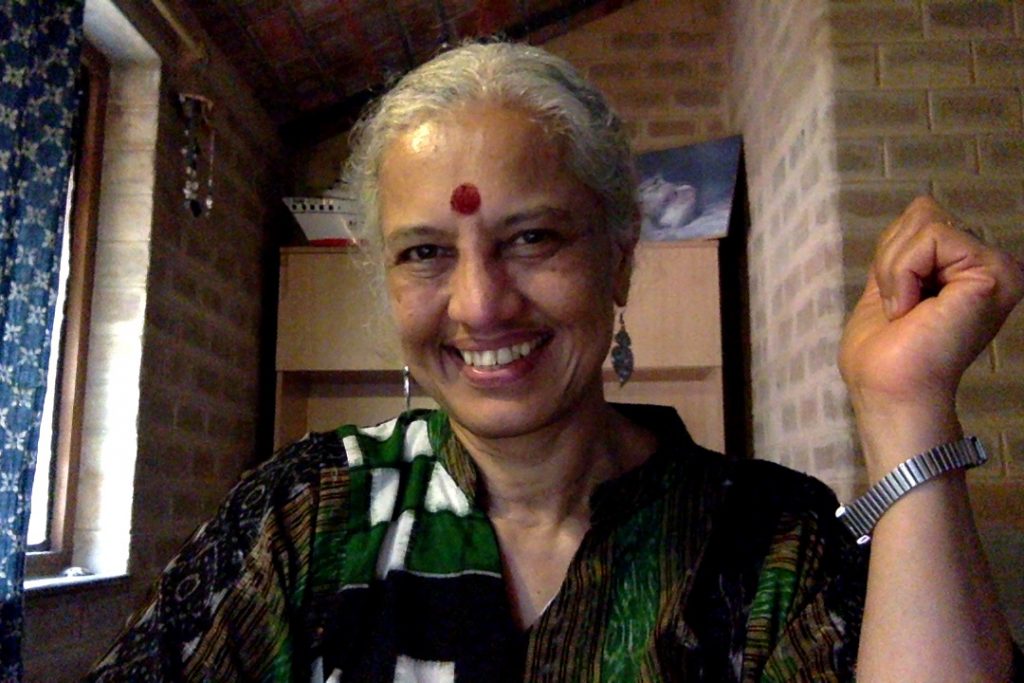
Prof. Prajval Shastri is an astrophysicist retired from Indian Institute of Astrophysics, Bangalore. She specializes in the area of phenomenology of active galaxies driven by supermassive blackholes using multi-wavelength observations ranging from radio to X-ray wavelengths. For DOOT magazine, Prof. Shastri speaks to the DOOT team on her life journey, memories at IIA, research career, thoughts on gender disparities in science and science popularization etc.
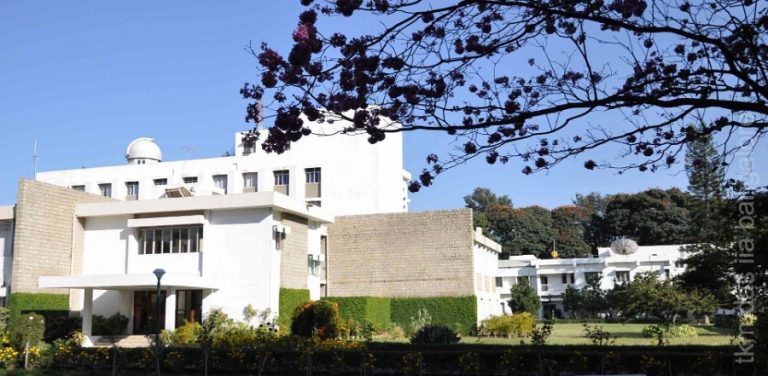
IIA is celebrating its 50th anniversary this year, and it is nice to be a part of such a reputed institute with a great legacy. The situation of working from home, in this pandemic crisis, made us all realise how badly we miss IIA. Spending a large portion of your life in this campus, can you please share your memories about IIA?
I was a PhD student at TIFR, and they had a campus inside IISc Bangalore. I spent several years of my PhD life there. We were a part of the “Bengaluru Astronomy Neighbourhood”. My memories of IIA go back to those days. Those days, at TIFR, we had a very small library. So, we used to go to the Raman Research Institute, but I used to often come to the IIA library. Sometimes I would come with the TIFR vehicle for the colloquium. But I would also like to spend more of my time in the IIA library because it would be the first in Bengaluru to get the Monthly Notices. And, you know there were no digital libraries those days. So I would often come in the morning and spend the whole day in the IIA library, which holds very nice memories. I also slimed into the Joint Astronomy Programme courses, in particular, J. C. Bhattacharya’s astronomy techniques course, and I got the chance to go to Kavalur for the lab of the course. We did some spectroscopy with the 40-inch telescope, and rode up and down the 90-inch platform – it was being built. That was a superb experience.
Many years later, I joined as a faculty in IIA. My best memories are of Kavalur. I had observed at McDonald Observatory, which is one of the best observatories for optical observation. It is the darkest observatory in the US. That was a fantastic experience. But Kavalur was pretty good too, primarily because of the very committed staff there. They were respectful and not gender-biased. For me, this was a very positive experience, quite a contrast to TIFR. I think it speaks to the kind of training they got from Vainu Bappu and the culture that Vainu Bappu had built. Also in Kavalur, the staff would give their everything for our observations. That was one very strong memory.
The other enjoyable memories are with my students and their friends. In my early years, several of us would gather weekly in the coffee lounge irrespective of our specialisation, and we would have free-flowing astrophysics discussions. That was very nice. We interacted in a lot of other ways too – like we played volleyball together quite regularly, went for a picnic or two etc.
There was a formal journal club also, every week. I did make a lot of friends, some of them are retired now, some of them are still there. I had 3 PhD students who graduated from IIA, and they are doing extremely well as faculty in TIFR and PRL. I also had intern students who came for short term projects, and I had a lot of fun with them. Most of them are doing PhDs in astrophysics, which is a very good feeling. They are still in touch and bring back a lot of positive memories.
And I must mention the International Year of Astronomy 2009. I was in the core-team, which was excellent and worked extremely well together. We planned early, built partnerships with amateur astronomers, science activists, theatre people and teachers, a lot of people from IIA contributed, and what we achieved in terms of number and reach of the activities was unprecedented and went far beyond our expectations – that was a fabulous experience and a strong memory.
You have done very interesting research on supermassive black holes and AGN systems. Can you tell us about your major findings and how the field is currently progressing, given the developments in observational astronomy?
Research in physics on giant black holes in distant galaxies is a fascinating field. And happily, for me, it has continuously been an exciting one. It had been about 15 years since people had connected the unexplainably powerful radiation from some distant suspected galaxies with black holes. Meanwhile, my supervisor Vijay Kapahi and his collaborators had just published empirical evidence supporting the predictions of the idea of Martin Rees, Roger Blandford and others that all the powerful jets of plasma launched from accreting black holes had bulk relativistic speeds. This was an exciting topic, and my thesis landed up being that. Relativistic beaming in Active Galactic Nuclei was the title of my thesis. I found more evidence consistent with the jets being relativistic, especially for the predicted subclass of giant black holes. And then, going further the work I did with my students was about showing that inclination of the accreting giant black hole to the line of sight was a dominant predictor of what we see in these systems, including the structures of the parsec-scale plasma jets, the evidence for coherent magnetic fields, the spectra of the x-ray emission etc.
In the early days, we were like pathologists, doing research on some special galaxies which did weird things. Over the past 15 years, however, accreting supermassive black holes have come to the centre-stage of galaxy evolution. This means that the galaxy evolution physicists and the giant black hole physicists go to the same conferences too, which never happened in the earlier time. That was really fabulous. My recent work has also been in this area of feedback between the accreting giant black hole system, its near environment and star formation in the galaxy.
It is exhilarating that the 2020 Nobel Prize is awarded for black hole physics. Two of the winners, Reinhard Genzel and Andrea Ghez, did a fantastic job looking at the motion of the stars in the centre of the Milky Way and using Keplerian physics, they obtained the mass of the central dark object. From the closest orbits, they could get an upper limit on its size and therefore, infer that it is a supermassive black hole. Unlike the circumstantial evidence from active galaxies and relativistic jets etc. this is the direct evidence for a massive black hole in the centre of a galaxy.
Based in Bangalore, you are very active in outreach and science popularization activities. It would be nice if you can tell us some of your outreach experiences.
I started my outreach activities as a young faculty, and it was very mundane in the beginning – mostly giving lectures to college students. As a TIFR student, I used to do a little bit of outreach. In the Ooty observatory, we used to get a lot of visitors on Saturday, and it was our responsibility to take them around and show them the telescope and answer questions, both adults and children. We had no training for that. Then as a post-doc in Austin, I saw a rich outreach program both at the university and at the observatory. It was when I got involved with the People Science Movement that things changed for me, and it played out in IYA2009.
Firstly, it was about acknowledging that outreach is not about us smart people describing this “very very difficult” thing called astrophysics to the so-called “ordinary” people. Outreach is a two-way street. When fielding questions from children and adults about not just what we know, but how we know what we know, what is the process of discovery, and how did we come to this conclusion etc., the process deepens our own understanding even though we consider ourselves as experts. That was a big shift for me, and that has driven my outreach work.
I do outreach because I think science is for everyone. Scientific thinking should be a way of life for everyone, whether they are doing science or theatre or art or whatever. I think if they understand the scientific method, they will be better artists. The scientific method is the best method if we have to understand nature.
It is not perfect, but it is self-correcting, and as scientists, we have a responsibility to ensure that it indeed corrects itself. As citizens, we all need to understand the scientific method. It may be that a few scientists actually do specialized research in the laboratory. But in terms of understanding what science is and what the scientific methods are, science should be for everybody. This is written in the constitution too!
Apart from science, you have been actively involved in various social platforms like that of gender discourses and women issues. What inspired/motivated you to become a socially-committed scientist?
It wasn’t exactly an inspiration as such. I think it’s really because of my parents. My father was a medical doctor, and my mother studied economics. But both of them were science buffs. They were active communists too, and they brought that political understanding of the world to everything that they did, including parenting. They bought a lot of fantastic children’s books on science and maths for me. I was really floored when I read about the gold-foil experiment when I was 8 or 9 years old, and I wanted to be a scientist right then. We used to regularly lie on a mat in our garden, watching the stars and the Milky Way. They also situated all of that for me in a larger context. For example, the atomic bomb, the cold war and the peace movement – all of these were everyday topics for me and my parents, and also some of their friends who hung out with us. This really helped me to have a broader understanding of various topics. The idea that science is for everyone is something I was brought up with! That is what makes me believe that even if you are a dancer, you need to understand science because it will make you a better dancer just like I, as a scientist, need to understand dance, and it will make me a better scientist.
It is true that this sort of bringing up is opposite to what institutions do where they discourage you from thinking about anything beyond your narrow work. Also, there is this concept that institutions make you believe – that you are here doing physics because you are brilliant. I think both these things are problematic.
In many societies, the intellectual vigour of women is always questioned. This is well reflected in the counts of women scholars in subjects like physics and mathematics. Awareness against this wrong notion is the first step in all gender gap discourses. You are a living example for women to have intellectual pursuits of higher order. According to you, how can we get rid of this misconception in society?
That is a very big question. One aspect is what you said – that I am an example. That is because of my privileged bringing up. There were, of course, my parents. I was born the year after Sputnik was launched. It was an era when there was a lot of excitement about science in the air, in the public discourse. There was an optimism that science would lead humanity to abundance and prosperity. I should say that even in my school, which was an ordinary Kannada medium school in my town, all teachers stressed understanding the concept, with less emphasis on rote learning. We really played around experimenting in the labs, and my college teachers were also motivating. But most important, in college, there was no hierarchy between “theory” and “experiment”, and I am very grateful to my college for that. I actually appreciated it when I found the opposite climate in IIT and TIFR, where I did my higher studies. I am saying all this because I think there is a connection with the gender inequity question.
The question about why there is such a skewed distribution of men and women in science was there somewhere at the back of my mind when I was growing up. When I was 11 years old, my mother had given me Marie Curie’s biography written by her daughter to read. I read a lot of science fiction and one book called Andromeda by Ivan Yefremov, which is about space exploration and, had a lot of women scientists as well as men scientists in it. The story has an ambience of very open and healthy relationships between men and women. That influenced me hugely. I somehow naively expected that in science and higher education, it would be like that. I went to a girls’ college in my town. But the teachers in physics and maths were of mixed gender with no disparity. One physics professor and one maths professor were Roman Catholic nuns. Hence, it was not in my mind that gender inequity was such a problem in science today. But when I went to IIT, it really hit me, and more so in TIFR. I think I survived because of the cultural capital that I came with. Many of the experiences were not nice. People saw us first as women, and then they saw us as short, tall, fat, what we wore, etc., but they mostly did not see us as physicists. Patriarchy and misogyny were very deep, but we didn’t know these words even. Some of us didn’t survive; some of us survived because of our privileged background.
When it comes to what we should do about it, fundamentally, the barriers are within the institutions. Scientific institutions claim to be meritocracies. But in reality, that is not the case. This has to be addressed.
People often talk about attracting girls to science. However, the statistics don’t at all suggest that girls are not interested in science. You can look at the papers we published as part of the International Union of Pure and Applied Physics conferences. There are more girls who actually get fellowships like INSPIRE, IAS etc. On the other hand, it was very common for people to tell us that you got a good grade because we looked good or wore such-and-such clothes. These things happen even today. Girls are also being told, “you will get married after PhD – how you will balance work with family”. Those things are not said to a man.
All of us are raised to find sexist actions as acceptable. We need to get trained to overcome that. The primary thing we need to do is to get away from this thing of ‘fixing the women’. There is nothing wrong with the women. We need to address the barriers within the institutions.
Discrimination at work is a significant problem faced by women who came out fighting the patriarchal notions of any society. We are very eager to know your experiences at the workplace in the early days of your career. Did you feel discouraged at times?
Yes, there were a lot of discouraging experiences, both personally for myself and friends around me. We were often seen as women first, rather than as individuals who are excited about physics. People would say stuff like, “Oh! How can she go to the observatory? How can she stay up all night? What does she do when she gets her periods? She got a good grade because she is a girl”. So it was not a level playing field at all. There is evidence that this is a global phenomenon, and everywhere young women leave the field because of their negative experiences. But some of us survived. I think we stayed primarily because of the privilege and the cultural capital we came with, which enabled us to somehow plough through.
In the student newsletter of IISER Pune called KALPA, there was a particular issue with an article called “Misogyny Inc.” It speaks of students’ experiences in the hostel and so on. The experiences were really terrible. However, it is really heartening to see that there were younger male students who actually questioned the toxic behaviour and also the unthinking behaviour that arises in group settings. That was actually quite positive and hopeful. So it is essential to look at how people react to women. For example, in faculty meetings, it is very unconscious, subtle and very common that a man saying something animated is considered very dynamic, but a woman saying something animated will be asked to calm down or considered as difficult to get along with.
All these things are tiny, taken just by themselves, but they can become big things. So they need to be curtailed. I think the good thing is that at least there is some dialogue now. When I was a student, these things never came up. If we had a negative experience, the whole ambience was that it is your personal problem. You may share it with some of your friends outside, but not at the workplace. That trend has changed, which is good. But the important thing is, unless there is deliberate and concrete action, things will not change. And the way forward is not to fix the women, saying women need skill-development, confidence-building or even karate classes.
What are the kind of activities going on in India to address gender issues? How has the response of Indian science communities, mainly the physics community, evolved over the past three decades towards these movements ?
To start with, I would say the efforts have all come from outside the science community. There have been work by e.g., sociologists, on “gender inequity in sciences” as part of their scholarship. But the problem is that within the community, especially in India, we are so insulated that we stop studying sociology, history etc. right at the college level and therefore, as scientists, we have no clue about these studies. For example, there was a sociologist Neelam Kumar who published a study in 2001 of four different Indian science institutes. She compared the productivity of men and women scientists and found that there was no productivity deficit between men and women. But women were lower in the hierarchy. Age of women was also higher at a given level which implies that women have to wait longer to reach a certain position/level. This was in 2001, but I, for example, had no idea about this study until many years later. Scientists have been completely oblivious to such studies.
Also, some efforts have been there from the government, who did recognise that there is a serious gender inequity problem in the field of science. So the government did put in play certain measures, for example, DST instituted the so-called “Career-break Fellowship”. Many people have benefitted from it. But they have made it open only to women, which is again patriarchy because you are assuming that it is only women who will take a career break. It may be true that the majority of people who take career breaks for the family are women, but that doesn’t mean there are no men who are doing that. Similarly, the policy of child-care leave for Govt. employees is open only to women; men cannot take it. So again, it is a patriarchal approach reinforcing that women have to take the responsibility of child care. In short, the government has recognised the problem, but the measures that they put in are all reinforcing the root cause of patriarchy.
In 2004, the Indian National Academy of Sciences commissioned a report, which clearly says that patriarchy is the source of the problem. But when it comes to actual implementation again, be it DST/UGC programme or gender sensitisation schemes, all are for women, not for men. However, studies indicate that it is not because women are less competent or less productive that they are not advancing, but that there are other barriers within institutions. For example, the Pasadena Charter of the American Astronomical Society says that one very clear signature of bias is when the successful applicants have a lower fraction of women than the applicants’ pool. For example, in the case of PhD selection, suppose we take the gender ratio of the applicants’ pool at face value, then selected candidates should show the same gender ratio. If it doesn’t, then that means the selection process is gender-biased. If the fraction matches, that doesn’t mean everything is fine, but at least it means necessary conditions are met, if not sufficient. These are the kind of tools that need to be used by institutions to monitor institutional bias.
Then there was the book “Lilavati’s daughters” commissioned by Indian Academy of Sciences where they got around 100 women scientists to write their autobiographical stories. It was quite an achievement due to the fact that a science academy commissioned it because a major challenge to mitigate gender inequity is that within the scientific community, there is little acknowledgement that there is a problem.
Now for physics, under the Indian Physics Association (IPA), there is a ‘gender in physics’ working group, and under the Astronomical Society of India (ASI), there is a Working Group for Gender Equity. The ASI group, now headed by Preeti Kharb, one of my PhD students and graduate from IIA, has had sessions at ASI conferences with discussions on gender inequity since around 2013. A lot of good work is done by this team, and they started the “Anna Mani Gender Equity Lecture Series”. The main objective here is to bring gender scholars into our fora to talk about gender inequity. So there have been sociologists, philosophers and historians of science, who have spoken on these topics. This is actually a big step to get to know about the kind of work happening in their field related to gender inequity, which scientists tend to be clueless about.
I proposed the gender equity working group under the IPA, and in the process, we also brought out three science publications which had all women authors. One of them was Physics News, the IPA’s bulletin of invited articles, and earlier, the gender ratio of the authors was pathetic. Hence, we decided to bring out an issue with all women authors, not to showcase women or their work, but to convey that women are regular physicists who can competently write physics articles for a range of audiences. I guest-edited that issue of Physics News and also Resonance, which is the Indian Academy of Sciences’ publication. And, I didn’t find any difficulty whatsoever to find competent women to write these articles. It means that the editorial boards were utterly biased and simply not asking women to write. So there again we emphasised that what we need is not fixing of the women, but we need to remove the bias.
Finally, I want to mention the conference that I organised last year under the IPA called “Pressing for Progress 2019” towards gender equity in physics. It was quite a landmark event as it was a first of its kind in terms of bringing physicists and experts in other disciplines like sociologists, educationists and even theatre artists, onto the same platform. So there were physics presentations, and there were also presentations on gender inequity in physics. 30% of the participants were men, there were several men speakers as well on the issue of inequity, and there were several workshops which were designed as interactive sensitisation workshops. So, the way forward is to admit that it is not just a women’s problem, but it is everybody’s problem, so everybody needs to take steps to eliminate it.
We are excited to know about your hobbies and interests.
I was a voracious reader until I started my PhD. I used to read science fiction, non-fiction, thrillers, romance etc. but all that tapered off once I started my PhD. Now, it takes me forever to finish a book due to lack of time, but I do consider reading as one of my hobbies. I always loved music. I seriously learnt Western Classical piano, Carnatic vocal music for many years and also other styles like Dhrupad. I also love food; I belong to the “Live to Eat” category. But now the distinction between work and hobby has kind of gone and everything, whether it is astrophysics or music, seems like a hobby.
From your rich experience as an astrophysics researcher, what advice would you like to give to the young researchers in the field?
I think all of you will agree that astrophysics addresses absolutely fascinating questions, it will always remain exciting, and just the idea that laws of physics that we infer here on Earth seem to apply everywhere right out into the beginning of the Universe is really fascinating! But one danger I would think that PhD students should watch out for is getting too narrow, losing sight of the physics they are studying. There is a tendency in institutions to tag people by the tools that they are using rather than the physics they are investigating. It really annoys me sometimes when people say so-and-so-person is a “radio astronomer” or “theorist”. Now the thing is a radio telescope or the theoretical approach or computational simulations, are tools which are being used to study some physics – they are not the subject of study. So it is important to not lose sight of that physics. Of course, it is essential to become a deep expert in your narrow area. However, it is equally important to have an understanding of the broader sub-discipline that you are working in, at least to the extent that you should be able to teach it at the end of your PhD.
Also, it is a special quality of astrophysics that everything is connected to everything. In fact, one of my former colleagues at IIA, Bhanu Das, would never tire of quoting the physicist, D. ter Haar (supervisor of Prof. Siraj Hasan). D.ter Haar apparently used to say, “Astrophysics is the last bastion of the generalist”. That’s a privilege of astrophysics, and it is something to enjoy. So, for example, in addition to the research seminars which happen, there should be colloquia in astrophysics which are delivered in a manner to make them accessible to all the astrophysicists. When I was a student, if there was a colloquium in the institute, regardless of which area it was in, every person of that institute would be there. So that is something which needs to come back so that students stay wider in their understanding.
Thirdly, I would say that astrophysics is truly an international enterprise. Now more than ever, regardless of what the astrophysical problem is, partnerships and collaborations are key, whether it is because of the need for big complicated experimental facilities or for collaboratively using smaller facilities at different institutes. This also builds a great international community, but to really get the best out of it, I think it needs an open and non-hierarchical way of functioning between scientists, with a collaborative mindset rather than a competitive mindset. So I would say young people will benefit from being mentored in such a positive ambience, and they will also benefit from building it themselves in a non-competitive environment for the future.
Interviewers:
Raveena Khan is a Junior Research Fellow at IIA. She works in the field of solar spectropolarimetry.
Fazlu Rahman is a Senior Research Fellow at IIA. He works in observational cosmology.
Manika Singla is a Senior Research Fellow at IIA working in the field of exoplanets.
Sandeep Kataria is a Post Doctoral Researcher at IIA working in galactic dynamics