Commemoration of Evershed Effect on its 115th years at IIA
The Indian Institute of Astrophysics is commemorating the 115th anniversary of the pioneering discovery of the Evershed Effect in 1909 at the Kodaikanal Observatory. This milestone in solar physics, rooted in India, highlights the institute’s rich history spanning over 200 years, during which it has served as a hub for theoretical and observational studies of celestial bodies and the development of specialized instrumentation.
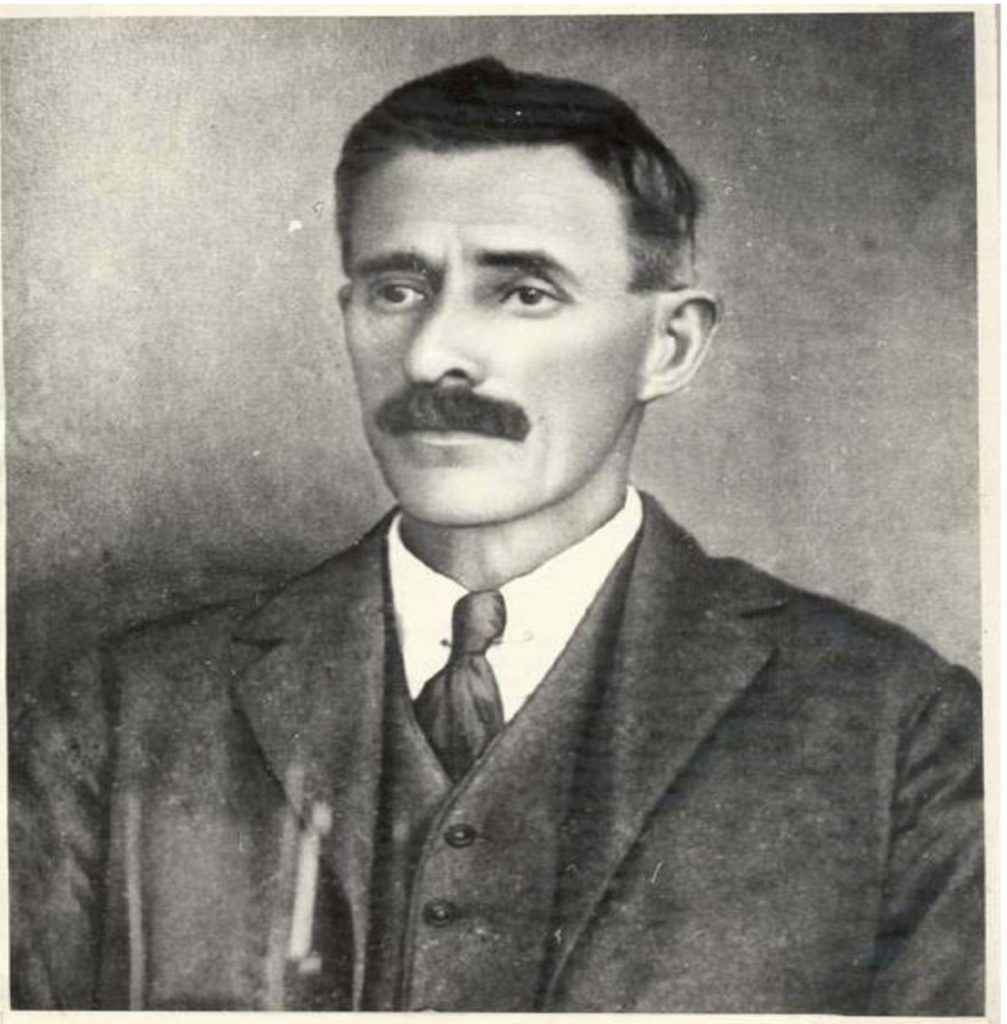
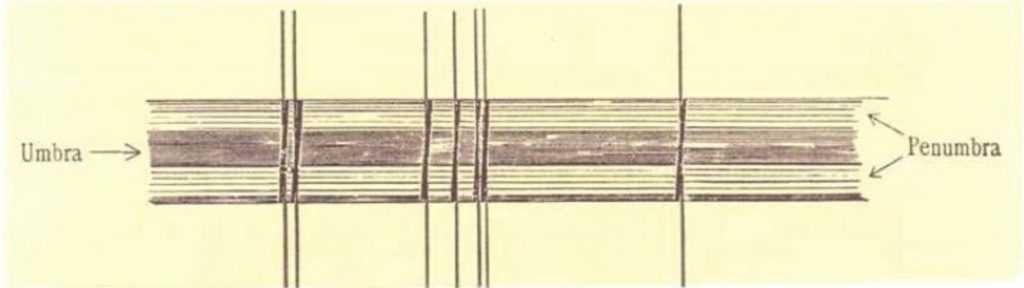
The discovery of the “Evershed Effect” represented a significant advancement in Astrophysics, marking the initial observation of the interaction between plasma and magnetic fields. This discovery greatly enhanced our understanding of sunspot characteristics and the evolution of solar activity. John Evershed’s analysis of sunspot spectra on January 5 and 7, 1909, aimed to gauge gas pressure within sunspots. His identification of subtle spectral line shifts within the penumbral region, a novel observation at the time, led to the inference that this phenomenon was due to the Doppler effect, indicating a radial outflow of solar plasma in sunspots along the solar surface. Subsequent research has extensively explored this phenomenon.
The Indian Institute of Astrophysics (IIA) Archives maintain an extensive collection of historical records connected to the institute’s past, including a significant amount of material related to John Evershed. This collection features the Original Discovery plate of the Evershed Effect, as well as correspondence, photographs, and other official documents related to Evershed’s work. Contact the IIA Library team (archives@iiap.res.in) for more information.



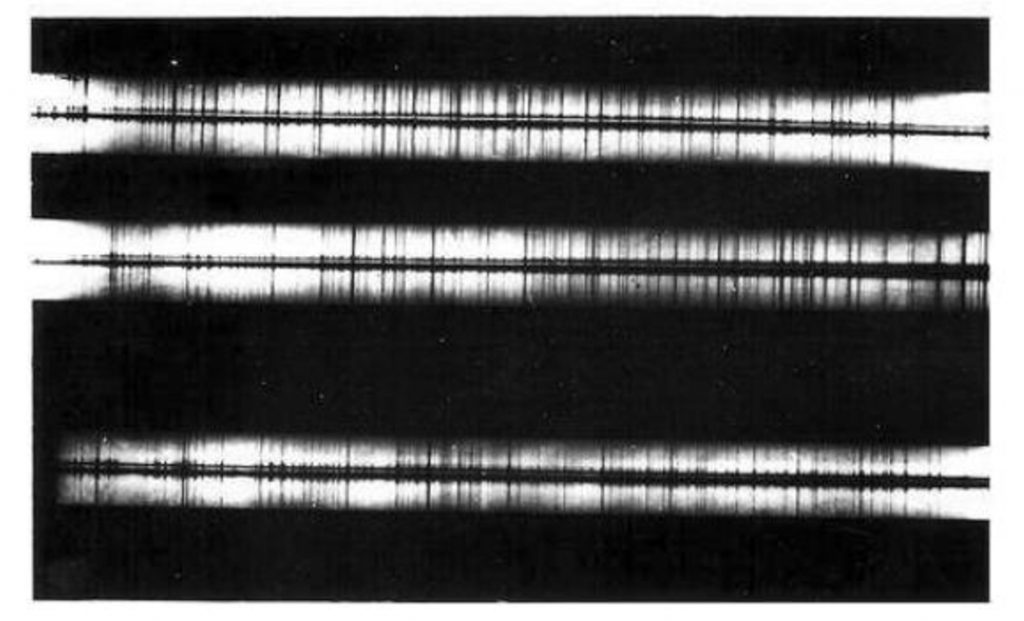
This effect is known as Evershed Effect
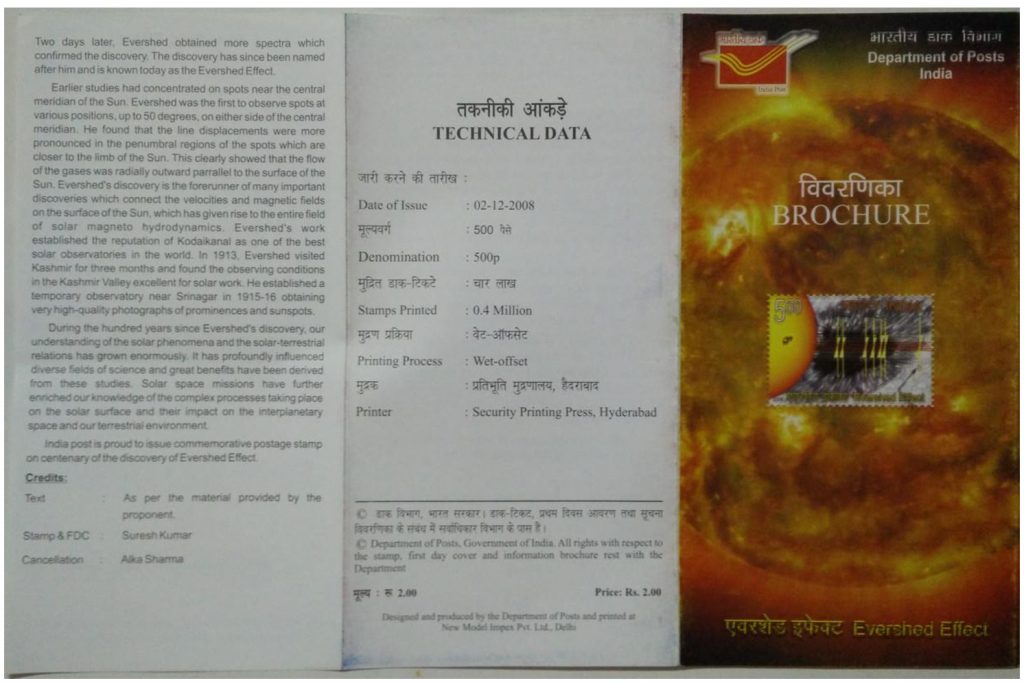
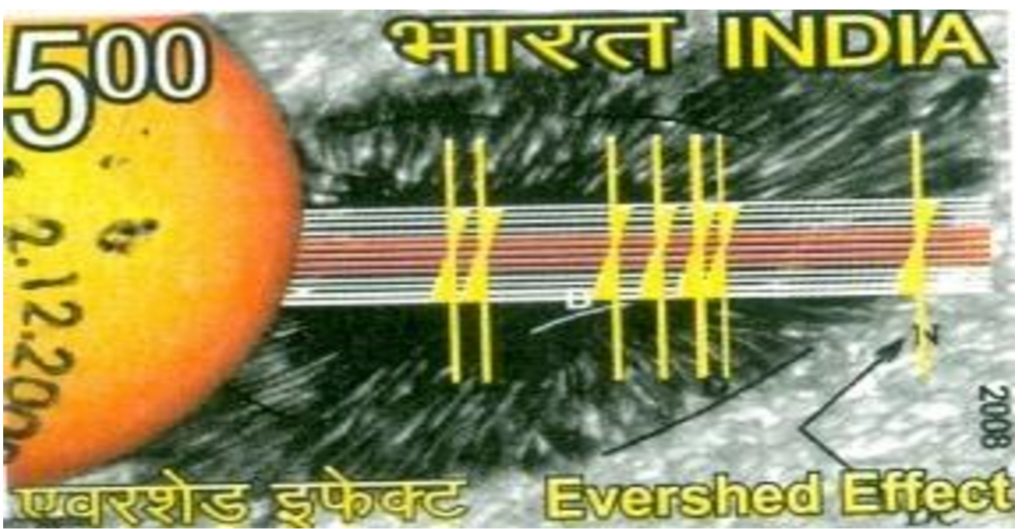


Press coverage of Centenary of Evershed Effect