Glimpses of Memories at IAO (Part-III)
B. C. Bhatt, Dorje Angchuk & Maan Singh
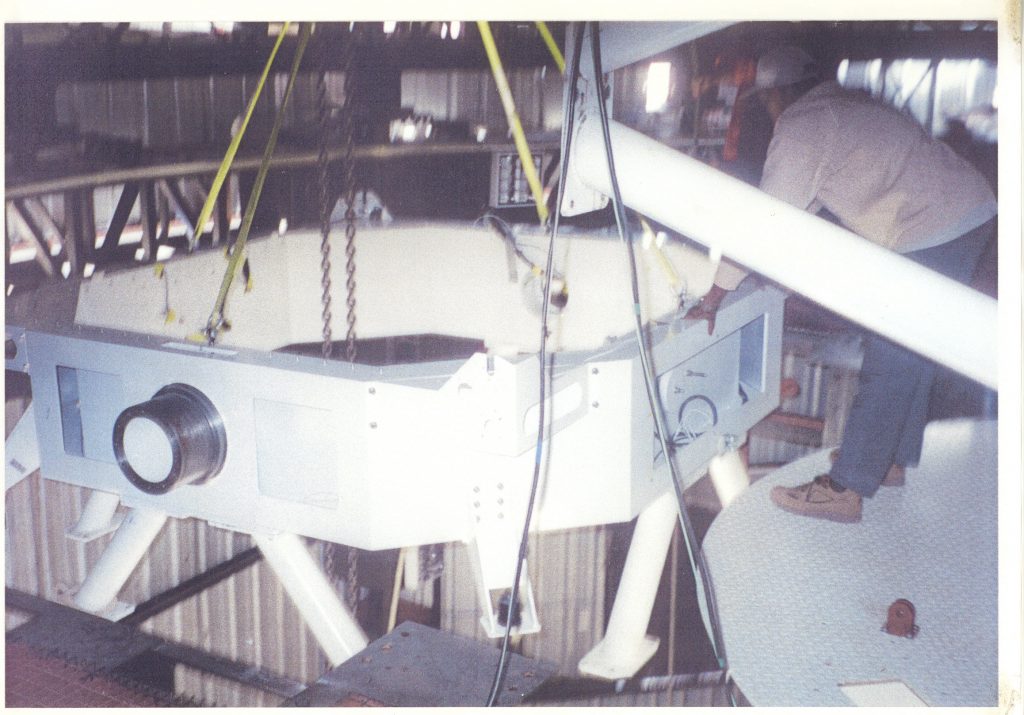
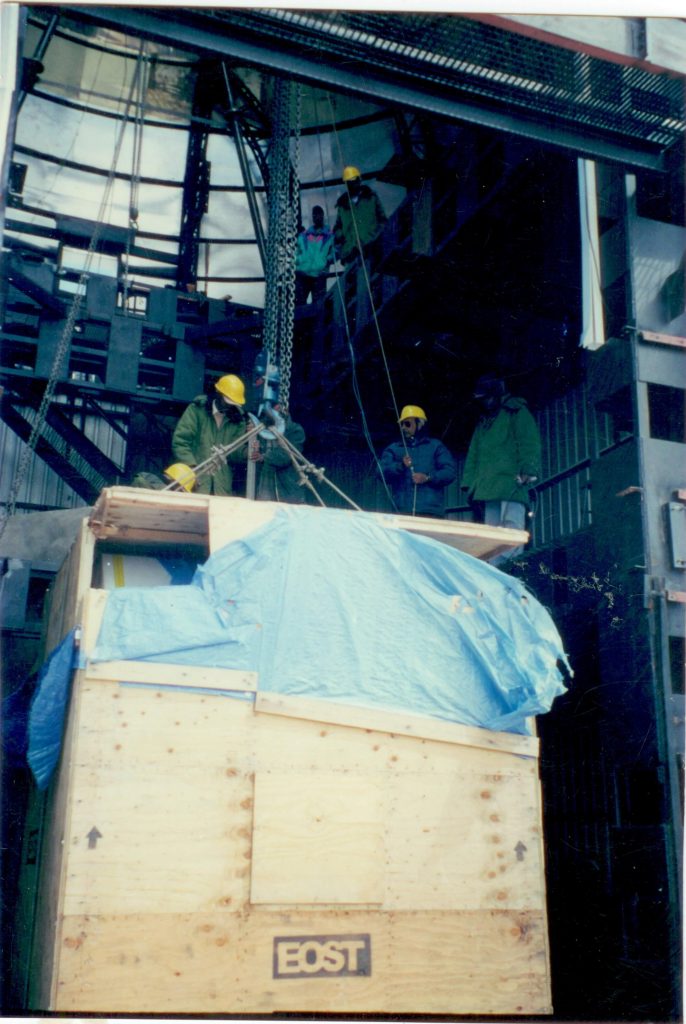
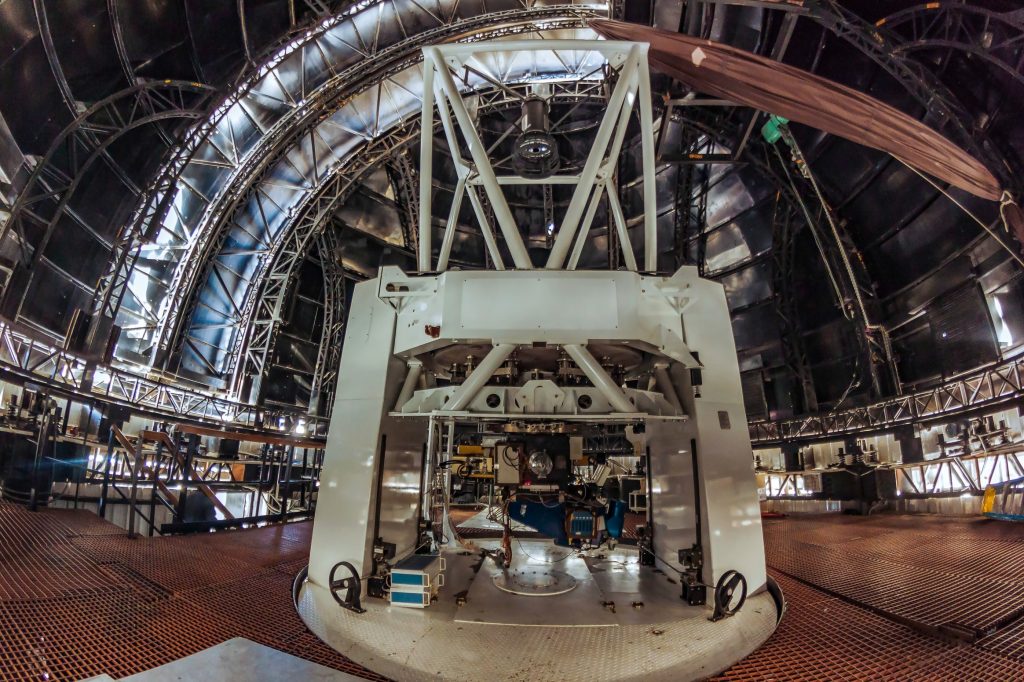
In the final part of this series “Glimpses of Memories at IAO, Ladakh”, I will start with the installation of the 2m telescope. The telescope consignment journey from EOST, Tucson (USA) to Hanle, Ladakh was over on 18/19th of August, 2000. During this period, all the civil/mechanical/electrical works of the telescope dome were completed, and the telescope pier was ready to take the assembly over it. In the meantime, few engineers from EOST also reached IAO-Hanle in different time slots. One of the Mechanical engineers, Mr. Michel, arrived first, and in his presence, the installation of the telescope started on 25th August (2000) onwards. Later some more engineers from EOST joined the installation/testing work. A complete team comprising of IIA engineers, technicians, and scientists was also available at the site to learn about the installation/assembly of different mechanical/optical and electrical/electronic parts of the telescope. Within one month, the telescope was ready to point to the sky and get the first glimpse of the night sky at Hanle.
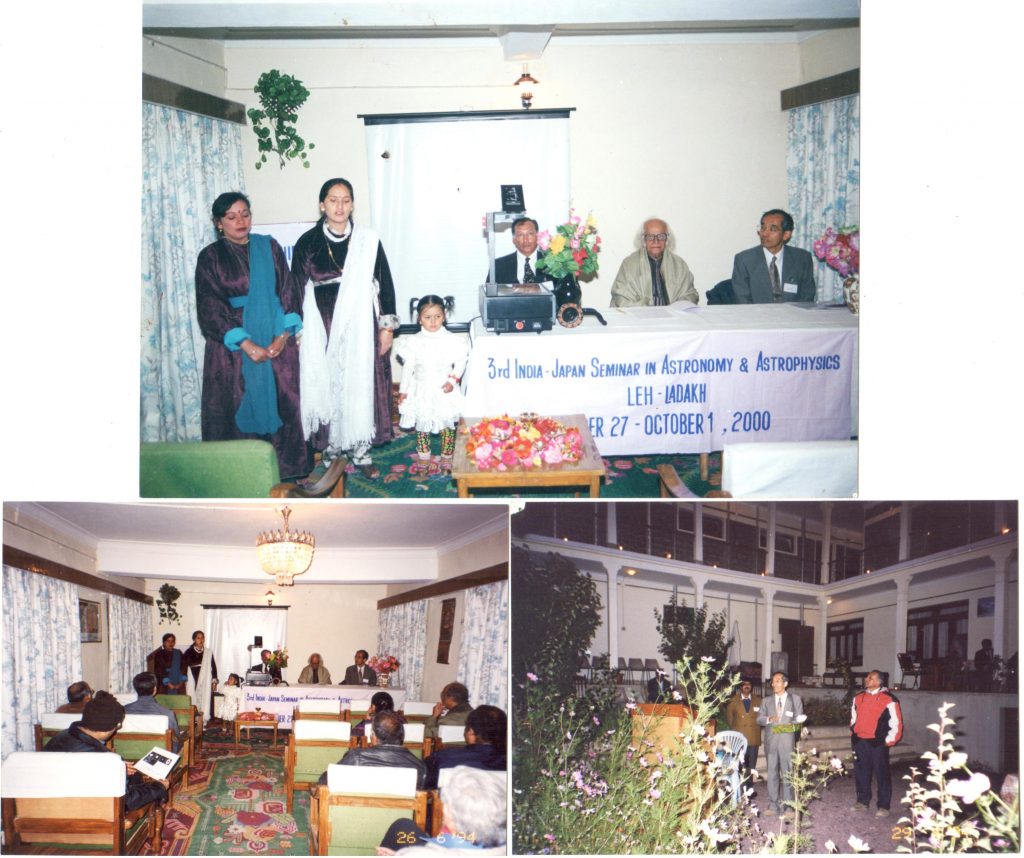
The IIA team and administration also anticipated this event of first light well in advance. They planned to make it ceremonial and organised the Third Indo-Japan Seminar in Astronomy & Astrophysics at Leh (Ladakh) from September 27 to October 1, 2000. Four scientists from Japan and many Indian scientists/Head of Institutions reached Ladakh to participate in the event. The first light observations were taken with the 2-m telescope in the gracious presence of eminent Prof. Yashpal in the late evening of September 26, 2000. On September 27, Prof. Yashpal inaugurated the newly built Meghnad Saha Astronomical Archive Building for office and guest house at the base camp of IAO, Hanle.
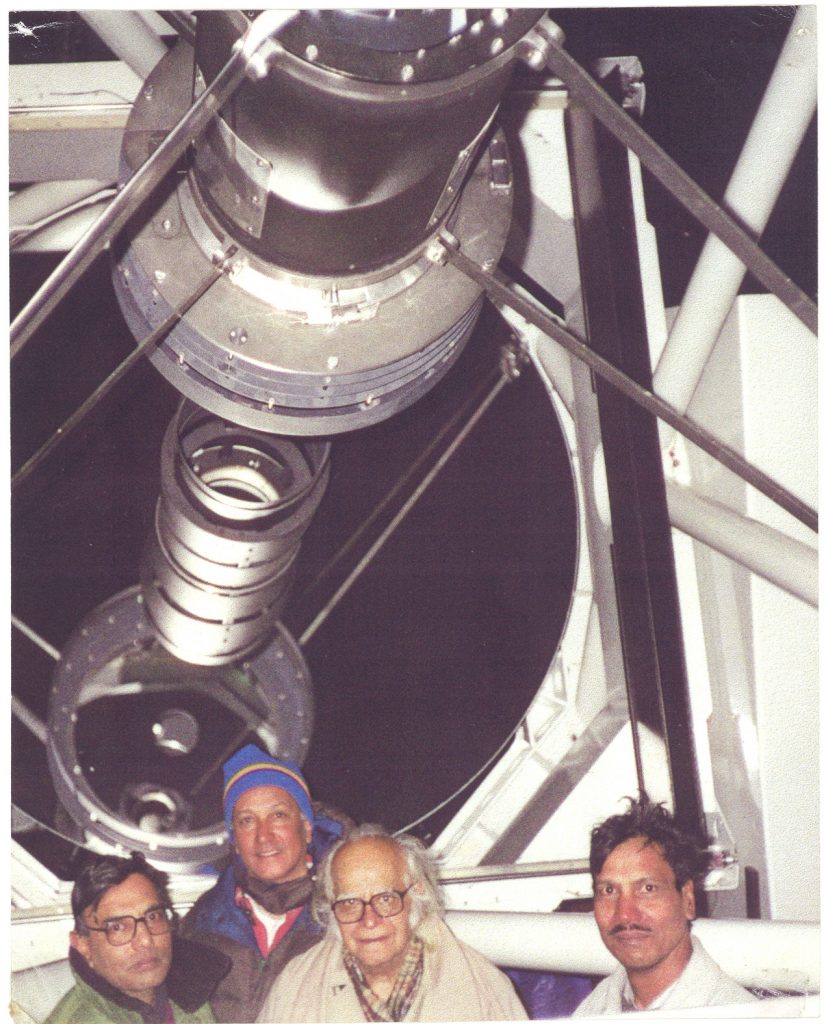
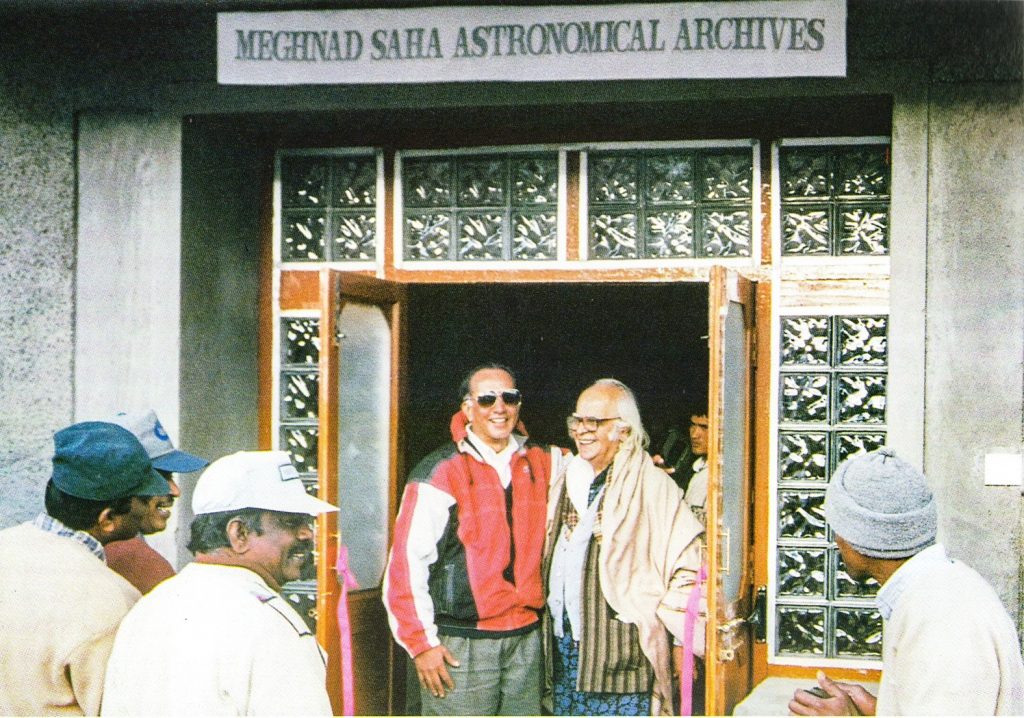
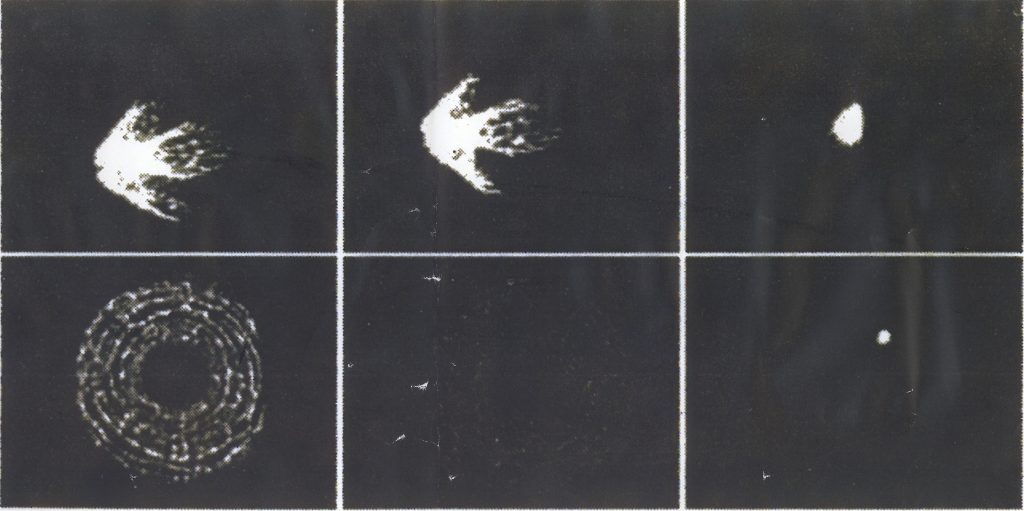
Prof. Yashpal and other IIA scientists reached Leh the same evening. At Hotel La-Galdan, Leh, the Indo-Japan Seminar was inaugurated by Prof. Yashpal by lighting the lamp and recital of Saraswati Vandana by local women. The workshop ran different sessions, and one night tour of IAO-Hanle was organised for the interested visitors. Despite the tight schedule of long travel and stay at 15,000ft, all the visiting scientists appreciated the arrangement made at IAO, Hanle, for their visit and the efforts IIA put into developing one of the best astronomical sites in India.
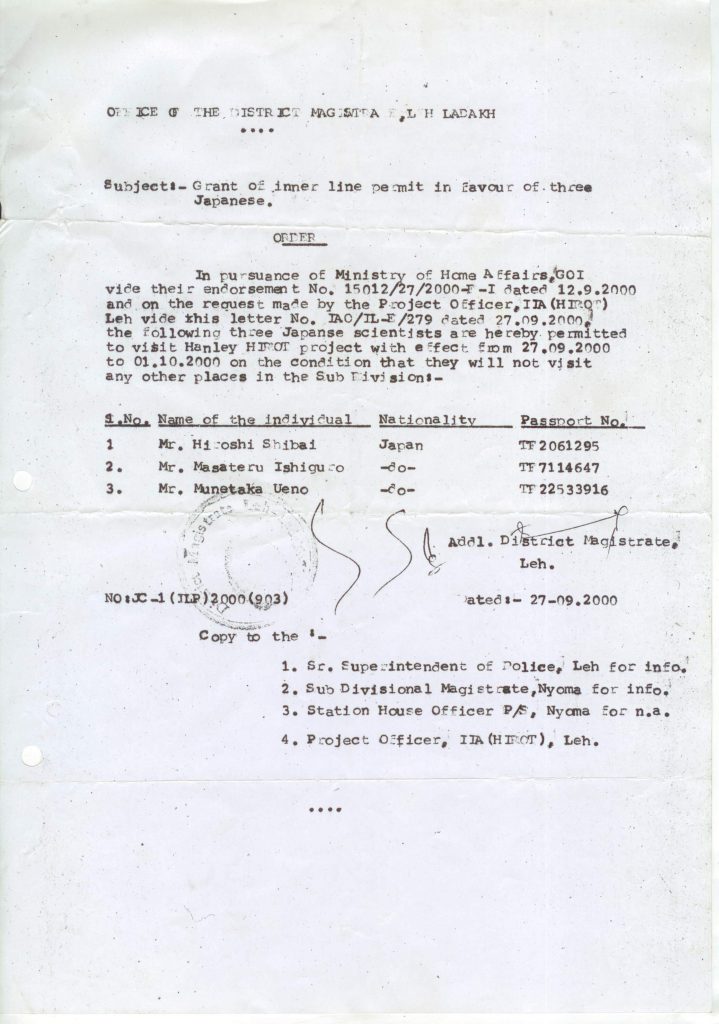
EOST engineers completed the installation of the telescope by the second week of October 2000. It was too cold at IAO-Hanle as well in Leh. Most of the IIA working teams also went back to Bangalore. Still, a few of us were there to test further mechanical/optical and software parts of the telescope and assess this newly installed facility’s performance. The winters were harsh, but we got excellent-quality sky during this period. So with one small 1kx1k CCD system, we continuously operated the telescope to test the complete system. Though the dome was complete, automation was not there. The control room was poorly insulated for the cold temperature. Some observing assistants from Leh helped with the dome’s movement manually, thereby wrapping themselves the whole night in blankets on the telescope floor.
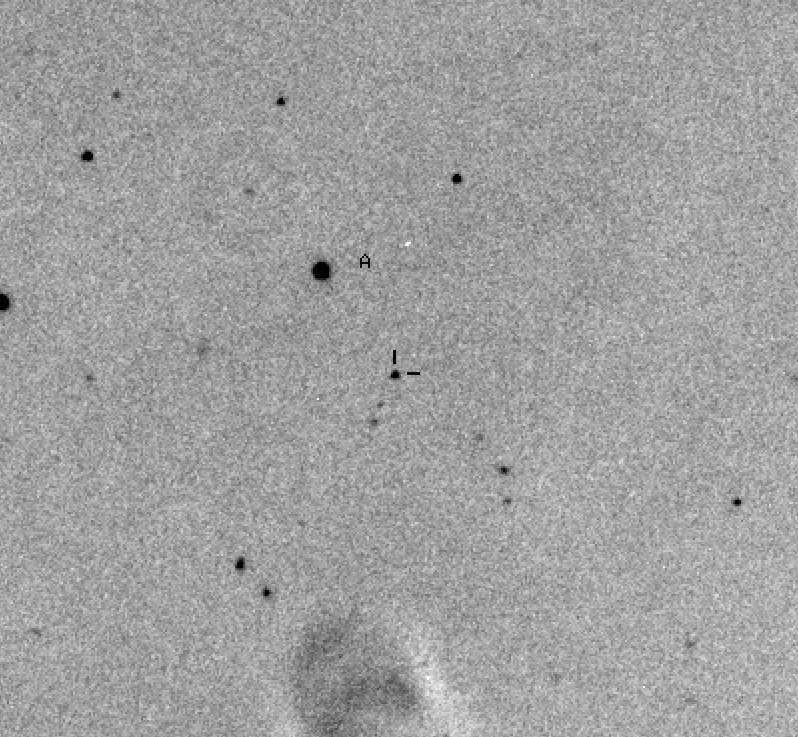
Somehow we managed despite the extreme cold from October to April and took rigorous observations to test the telescope capability, which provided an excellent performance all the time. First scientific observations of the GRB 010222 afterglow were recorded with the telescope on February 22, 2000. The results were published in BASI (Bull. Astron. Soc. of India, 2001, 29, 157). Our first year’s challenge operating the telescope all night during the winter months at IAOHanle, without much of automation, was a great experience and success.
After March 2001, IIA teams started coming back to Ladakh for various telescope operation works, automation of dome, network connections. The new first light instrument HFOSC (Hanle Faint Object Spectrograph Camera) also reached Hanle in May 2001 and was later installed on the telescope. Dome automation software was installed and also tested during this time. The local area network was established and tested with the CREST-Hoskote campus network via an Indian communication satellite. The telescope and data acquisition systems at Hanle are connected with the CREST Campus, Hoskote, for remote operation of this facility.
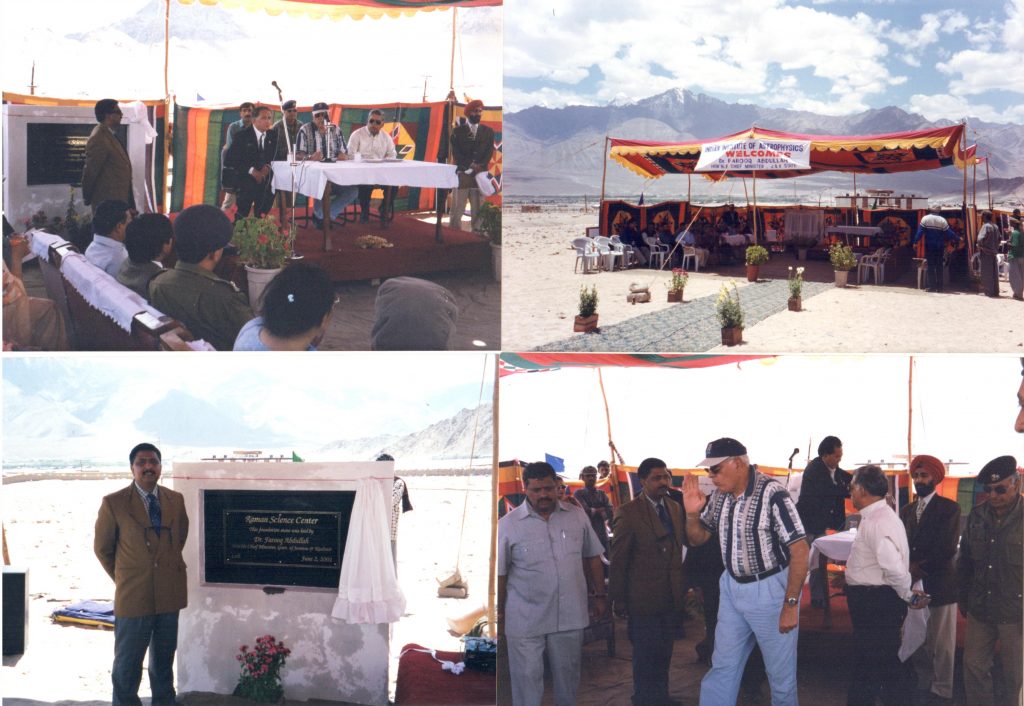
H.E. Farooq Abdulla, then Chief Minister of J&K, visited IAO-Hanle and inaugurated this communication link between IAO-Hanle and CREST, Hoskote, on June 2, 2001, in the esteemed presence of Prof. B. V. Shreekantan, the then Chairman of the Governing Council of IIA, from CREST-Hoskote campus. Later that afternoon, H.E. Farooq Abdulla laid the Raman Science Center’s foundation stone at the newly acquired campus of IAO in Leh town.
Meanwhile, all other work at IAO-Hanle continued during the 2001 summer to make it a comfortable workstation for Observatory operation. The EOST team also visited to work on the 2m telescope performance check and software update. Our experiences with the telescope operation were discussed, and necessary up-gradation works on the telescope system were performed. The HFOSC system was also installed, and the testing started. On August 29, 2001, a dedication ceremony was planned to name this telescope as Himalayan Chandra Telescope (HCT) and dedicate it to the nation. For this occasion, many scientists from India and abroad visited IAO, Leh/Hanle, and witnessed the ceremony.
All other tests on software and hardware of the complete telescope, data acquisition system, and communication system continued again from 2001 winter to April 2003 and finally, this 2m Himalayan Chandra Telescope is open for the user community in India and abroad with its remote operation center at CREST-Hoskote, Bangalore.
About the Authors
B C Bhatt joined IIA in 1994 and was part of the first team of IIA that did the site-testing and characterization of Hanle, Ladakh in November 1994. He was the Project Officer for setting up the 2-meter HCT at Leh/Hanle. Currently he is a professor at IIA and Scientist-in-Charge CREST campus, Hoskote.
Dorje Angchuk was the first person from Ladakh to join IAO as a Trainee Engineer during its initial phase. He contributed to the installation and commissioning of the 2-meter HCT, later getting a permanent position there. Presently he is Engineer-in-Charge, IAO.
Man Singh joined as Cook/Caretaker at IIA’s transit guest house, and was later posted as Caretaker, IAO, Leh. During this time, he supported the guest houses at Leh and Hanle including office related work. He is currently a UDC at Raman Science Centre, IAO, Leh.