The Indian Eclipse Expedition, 1922: records from IIA Archives
The scientific community is commemorating the Centenary celebration of the 1922 Indian expedition to Wallal, Australia, to observe a solar eclipse. Albert Einstein published his Theory of Relativity, arguing that gravitational objects with gravitational influence warped spacetime around them. On September 1922, a group of renowned astronomers conducted an expedition on a remote shore in Wallal, Western Australia, to test this theory. Observing the deviation of starlight caused by the Sun during total solar eclipses was an opportunity to corroborate the experimental proof of Einstein’s general theory of relativity. This expedition group included W.W. Campbell, J. Evershed (Kodaikanal Observatory), C.A. Chant, a group from Perth Observatory led by C. Nossiter, A.D. Ross, C.E. Adams, J.B.O. Hosking, and a private party from England.
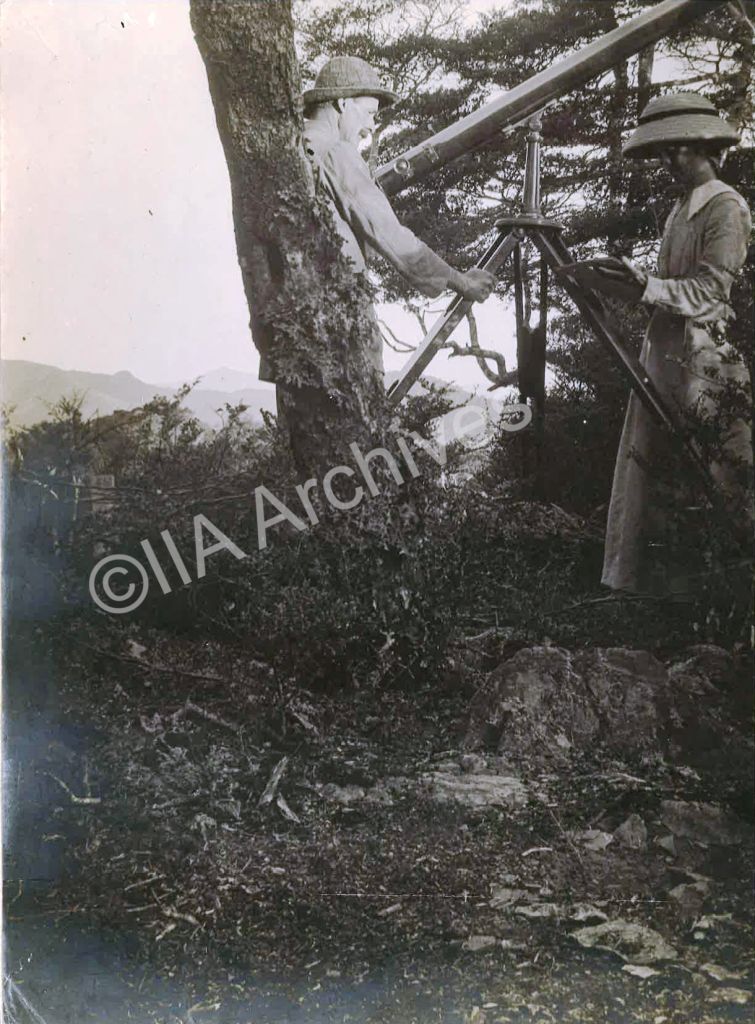
The objective of the Indian expedition led by John Evershed, former director of the Kodaikanal Solar Observatory, was to photograph the star field encompassing the eclipsed Sun to determine the light deflection near the Sun. Initially, the crew intended to occupy the Maldives Islands; however, transportation and funding issues necessitated a move to Australia. Initially, the Indian expedition crew consisted only of Evershed and his wife, Mary Acworth Orr. Then, Professor Ross of the University of Western Australia coordinated with university officials to assign Mr. Everson of the Physics Department to the Indian expedition team. A year prior to the eclipse, the Observatory workshop underwent extensive construction and testing of the instruments. It consists of a large camera case, 12×12½ -inch plates, and a wooden frame. The Royal Society and Astronomical Society lent a 16-inch coelostat for use with the Einstein camera. Eclipse utilised high-dispersion auto-collimating prism spectrographs with two spectrographs for simultaneous acquisition of east and west coronal spectra, thereby reducing friction and permitting a 45-minute descent.
The expedition sailed from Madras on July 28, 1922, and arrived in Broome on August 18 via Singapore. They created five dark transparencies for the Einstein camera and pier to photograph Canopus’s high dispersion spectrum. The expedition arrived at Wallal on August 30 and met with numerous eclipse teams, including those from the United States and Canada. With a concrete pier for lens mounting and coelostat, the 35-ton instruments were assembled in 18 days. A precise adjustment was challenging, so the coelostat was adjusted. There were irregularities in the driving clock, and star images remained stationary for 20 seconds before beginning to wander. They used a 16-inch coelostat and a 12-inch lens for the high-dispersion Canopus spectrum. After making all the necessary preparations, they observed the solar eclipse at Wallal on September 21, 1922. The Indian expedition party returned from Broome on October 24, 1922, and arrived in Kodaikanal on November 20, 1922.
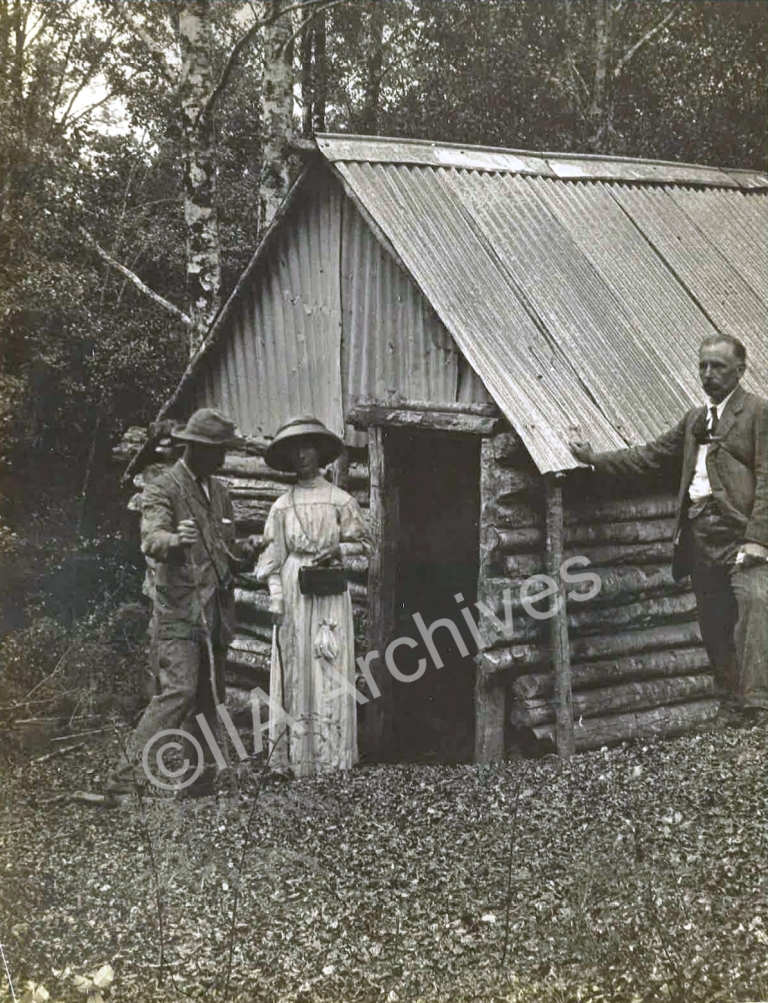
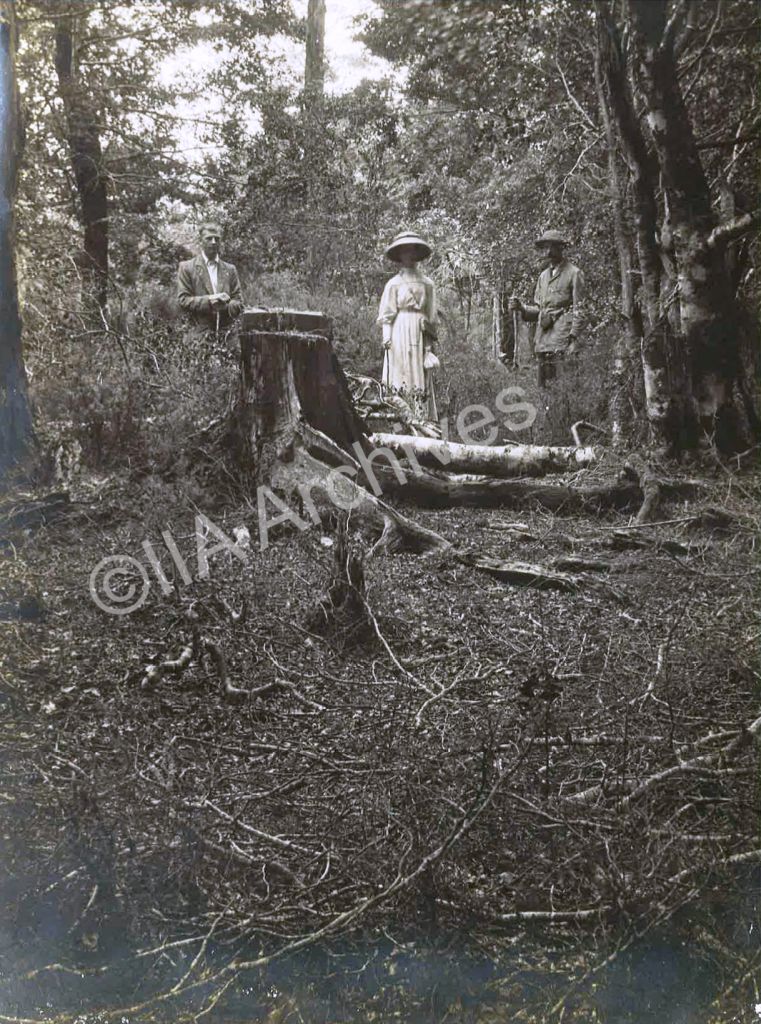
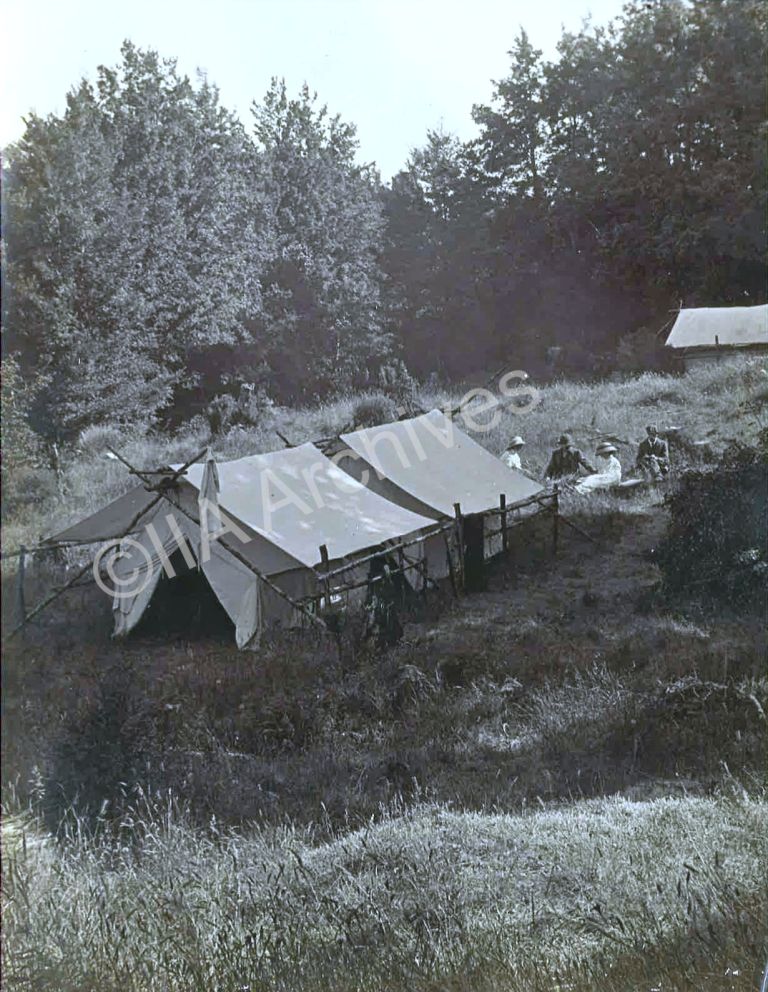
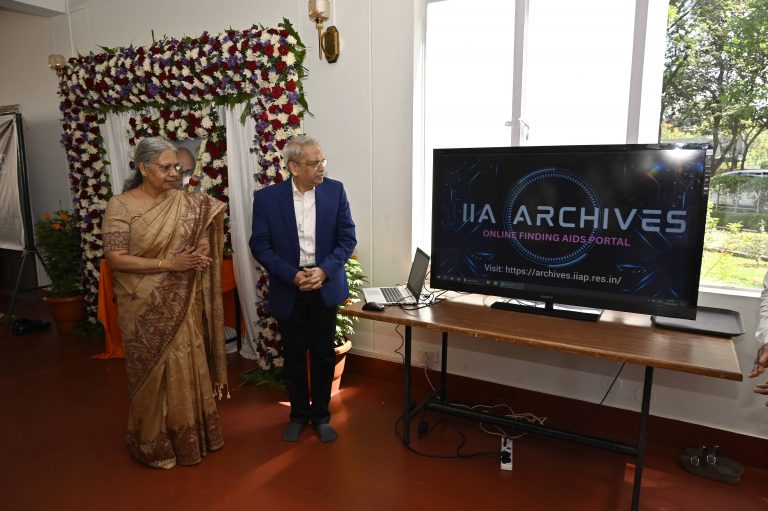
The archives of the Indian Institute of Astrophysics contain a wealth of historical documents pertinent to the institution’s past. John Evershed was the second director of the Kodaikanal Solar Observatory after the Madras Observatory’s operations were relocated there in 1899. The IIA Archives comprise an extensive collection of archival materials pertaining to John Evershed. It includes correspondence, letters from prominent scientists, observation notes, photographs, CDs, transparencies, and other official documents. We are preserving archival materials associated with the Wallal, Western Australia, expedition. The photographs from the expedition are significant evidence of this historical event. Feel welcome to contact the IIA Library team (archives@iiap.res.in) for more information about this historical event.